
In many online spaces, especially ads and social media, the phrase “official slot site” is used very loosely. The problem is that the word “official” sounds like something verified, licensed, or regulated.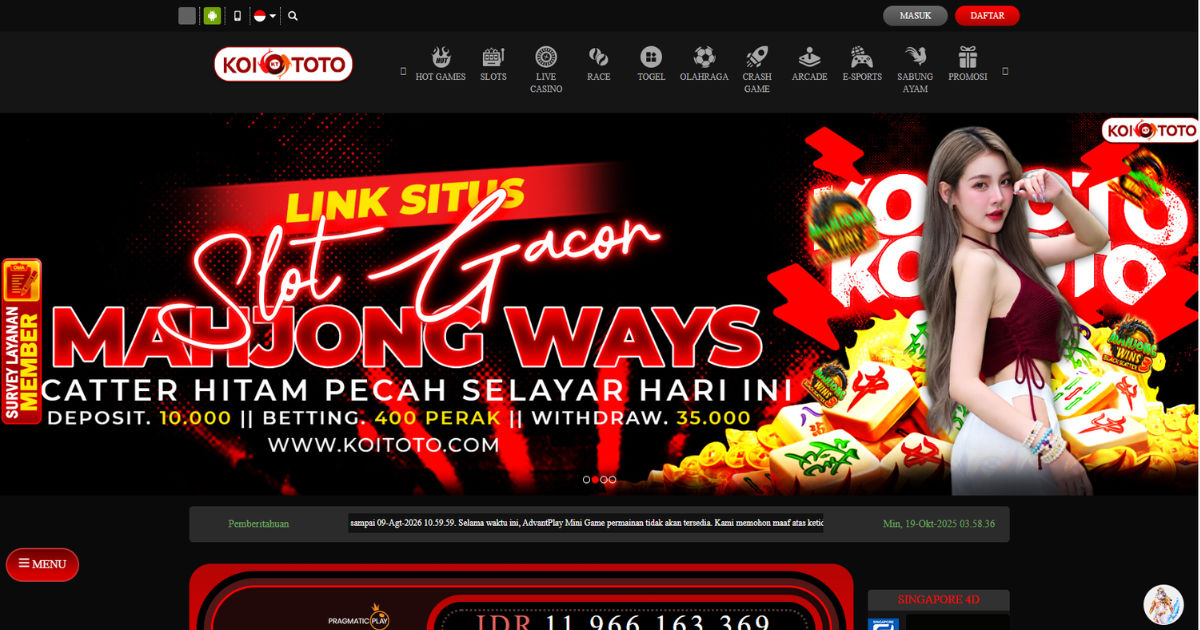
In reality, that is often not the case in situs slot environments. Many websites use this wording simply as a marketing tactic. It is designed to build trust quickly, even when there is no real authority behind the claim.
For users who are not familiar with how online platforms work, this creates a false sense of legitimacy.The confusion becomes stronger because different sites may all claim to be “official,” even though they are unrelated or competing platforms.
How Marketing Language Creates Misunderstanding
A big reason this term spreads so easily is marketing psychology. Words like “official,” “trusted,” and “secure” are powerful. People naturally associate them with safety and reliability.
In practice, however, these terms are not always regulated in online advertising, especially in informal or offshore digital spaces. That means anyone can use them without proving authenticity.
So when users see multiple sites describing themselves as “official,” it becomes difficult to tell what is real and what is just promotional language.
Lack of Standard Regulation and Verification
Another reason confusion exists is the lack of a universal verification system for many online platforms in this category. Unlike banks or licensed financial services, there is often no centralized authority that confirms which site is truly “official.”
Because of this, the term becomes self-declared rather than verified. A website can label itself however it wants, and users are left to interpret it on their own.
This is where misunderstandings often begin.
The Role of Copycat Websites
A common issue online is the existence of copycat or mirror websites. These are sites designed to look similar to others, sometimes using nearly identical branding, layouts, or names.
When combined with labels like “official,” users may assume they are accessing the original platform when they are not.
This overlap between branding and imitation adds another layer of confusion, especially for beginners who may not notice small differences in domain names or structure.
Why Users Often Trust the Wrong Signals
People tend to rely on visual cues when deciding whether something is trustworthy. Things like logos, testimonials, or familiar-sounding names can create a sense of credibility.
However, in online environments where branding is easy to replicate, these signals are not always reliable.
The term “official” often becomes one of those misleading cues. Instead of confirming authenticity, it simply adds confidence without evidence.
How to Think More Critically About Online Labels
The best approach is to treat labels like “official” as claims, not facts. A claim needs verification before it can be trusted.
Instead of focusing on what a site calls itself, it is more useful to look for independent confirmation, such as regulatory information, transparent ownership details, and consistent external references.
If that information is missing, the label should be treated with caution.
Conclusion
The phrase “official slot site” is confusing because it blends marketing language with implied authority. It sounds like a verified label, but in many cases, it is simply a self-applied description. This creates a gap between perception and reality, especially for users who are new to these platforms or unfamiliar with how online advertising works.
The real issue is not just the wording itself, but how easily trust can be influenced by terminology alone. When multiple sites use the same authoritative-sounding phrases, users are left without a clear way to distinguish legitimacy from promotion.
In my view, the safest mindset is a skeptical one. Not cynical, but careful. Online labels should never be taken at face value without supporting evidence. Once you start reading claims as marketing rather than proof, the confusion becomes much easier to navigate.
Ultimately, clarity comes from verification, not wording. And the more familiar users become with how these labels are used, the less powerful misleading terms become in shaping decisions.
