
The area of photonics has witnessed impressive advancements, especially in the development of various modulators that play crucial duties in numerous optical applications. Among these, fiber acousto-optic modulators (AOMs) and their many variants, such as space AOMs and free-space AOMs, stand out due to their flexibility and performance.
One of one of the most desired attributes in laser innovation is ultra-narrow linewidth, typically related to single-frequency lasers. These lasers generate light with an extremely narrow spooky size, making them perfect for numerous intricate applications, consisting of meaningful interaction systems and high-resolution spectroscopy. A fiber-coupled AOM, which integrates the AOM into a fiber optic system, offers smooth coupling with single-frequency fiber lasers. This integration demonstrates the trend in the direction of increased density and efficiency in optical systems without sacrificing efficiency.
The energy of fiber optic delay lines can not be overemphasized, particularly in developing innovative optical systems that need precise timing and synchronization. These delay lines harness the fundamental residential or commercial properties of fiber optics to handle light signals efficiently, enabling scientists and engineers to discover high-speed data transmission or intricate timing experiments with minimal loss of fidelity. The electric optical fiber delay line functions as a main part in this context, assisting in the adjustment of light signals to match specific requirements.
Discover acousto optic modulator q switch the most recent advancements in photonics, concentrating on the critical duty of fiber acousto-optic modulators in boosting laser applications, telecommunications, and accuracy optical systems for diverse markets.
Modulators are critical in laser systems, playing a vital role in changing constant wave outputs right into pulse layouts. Acousto-optic Q-switch modulators offer this specific purpose, enabling quick modulation of laser results, which results in high-peak power pulses.
Moreover, the distinction between acousto-optic switches and modulators is a vital aspect of understanding how these devices operate in different scenarios. Acousto-optic switches efficiently reroute beams, therefore allowing various transmitting functionalities within optical systems. On the other hand, a modulator changes the light’s residential properties, directly impacting the light beam’s characteristics. This distinction delineates their corresponding duties in laser systems and highlights the diversity of applications each device satisfies.
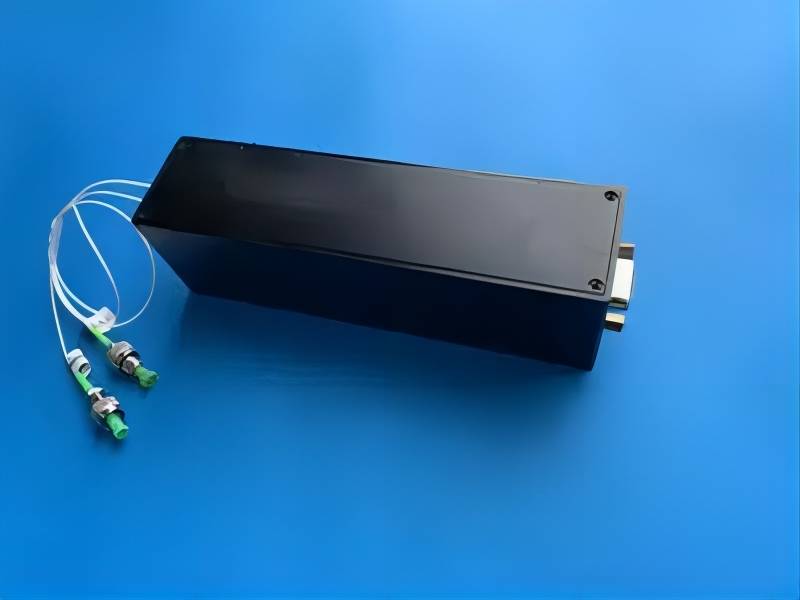
Acousto-optic devices have actually significantly gotten grip in the market, driven by the rising demand for advanced optical modern technologies. The acousto-optic modulator market is observing substantial development due to applications in telecommunications, army systems, and industrial manufacturing.
The features of narrow linewidth laser resources are essential to particular applications, where comprehensibility and precision are vital. Narrow linewidth fiber lasers display stable emission with minimal spooky spread, satisfying applications in fiber-optic communications and picking up innovations. These qualities are necessary when managing long-distance information transmission, where signal deterioration can substantially influence the top quality of details received. Combining these fibers with sophisticated modulators makes it possible for researchers to check out brand-new frontiers in optical interaction systems.
Acoustic optical deflectors add to the versatility of optical systems, using a method to control light dynamically and efficiently by making use of acoustic waves as the managing mechanism. Such devices can be located in different applications, from laser scanning systems to sophisticated imaging techniques. By utilizing the principles of acousto-optics, these deflectors aid in attaining rapid and accurate modifications in the beam of light’s trajectory without the demand for complicated mechanical components.
In discovering the sorts of pulse modulation, one realizes the ins and outs and range inherent in the field. Pulse modulation techniques, such as pulse-width modulation (PWM) and pulse-position modulation (PPM), allow control of light based upon exhaust to create differing signal types. These strategies foster improvements in electronic devices and photonics, from regulating laser outputs to improving the performance of fiber optic systems.
Additional factor to consider of optical passive components reveals their essential role in enhancing system dependability. Their contribution to overall system performance is critical, primarily when incorporated with modulators and other dynamic optical devices.
The expanding concentrate on space applications stresses the need for durable and reputable optical systems that can operate successfully in severe conditions. Space acousto-optic modulators, in specific, accommodate the unique requirements of space objectives, where aspects such as radiation direct exposure and temperature variations can dramatically influence performance. The development of space-grade acousto-optic devices guarantees that interaction and data collection remain nonstop in the harsh atmospheres of space.
Acousto-optic Q-switching stands for among the most reliable methods of creating high-energy pulses, important for applications ranging from laser marking to clinical treatments. The modulation capabilities integral in AOMs allow them to adapt to differing requirements, maximizing pulse duration and power output. As a result, they give an ingenious path to elevate laser applications across varied fields.
As we delve further into the future of photonics, it becomes significantly clear that development in laser modulators and acousto-optic modern technologies is critical. The advancements in modulator drivers improve the performance with which EOMs and aoms run, allowing much faster and much more reliable efficiency. The crossover in between advancements in modulation and the increasing demand for higher transmission capacity and lower latency in interaction systems recommends a future abundant with opportunities for enhanced optical interactions.
Recognizing the essential auto mechanics that underpin acoustic optical modulators will certainly cause remarkable layout and efficiency improvements as research proceeds to thrive. The exploration of new products, assimilations, and techniques in areas like micro-nano manufacture will likely generate devices with even better control and expanded functional lifetimes. These developments not only assure improved functionality for existing systems but invite totally new applications within emerging innovations in quantum computing, robotics, and progressed production.
In summary, the domain name of acousto-optic modulators and associated fiber-optic innovations symbolizes quick progress and complexity, working as fundamental elements within lots of contemporary optical applications. With the expanding demand for precision and high performance in different markets, the advancement of acousto-optic devices, such as fiber AOMs, remains to develop, adapting to new challenges and possibilities. As scientists and engineers push the boundaries of advancement, these devices will stay main to shaping the future of optical interaction, laser applications, and beyond, declaring a brand-new period of technical improvement.
